

Homemade Elderflower Cordial
A recipe before the season ends

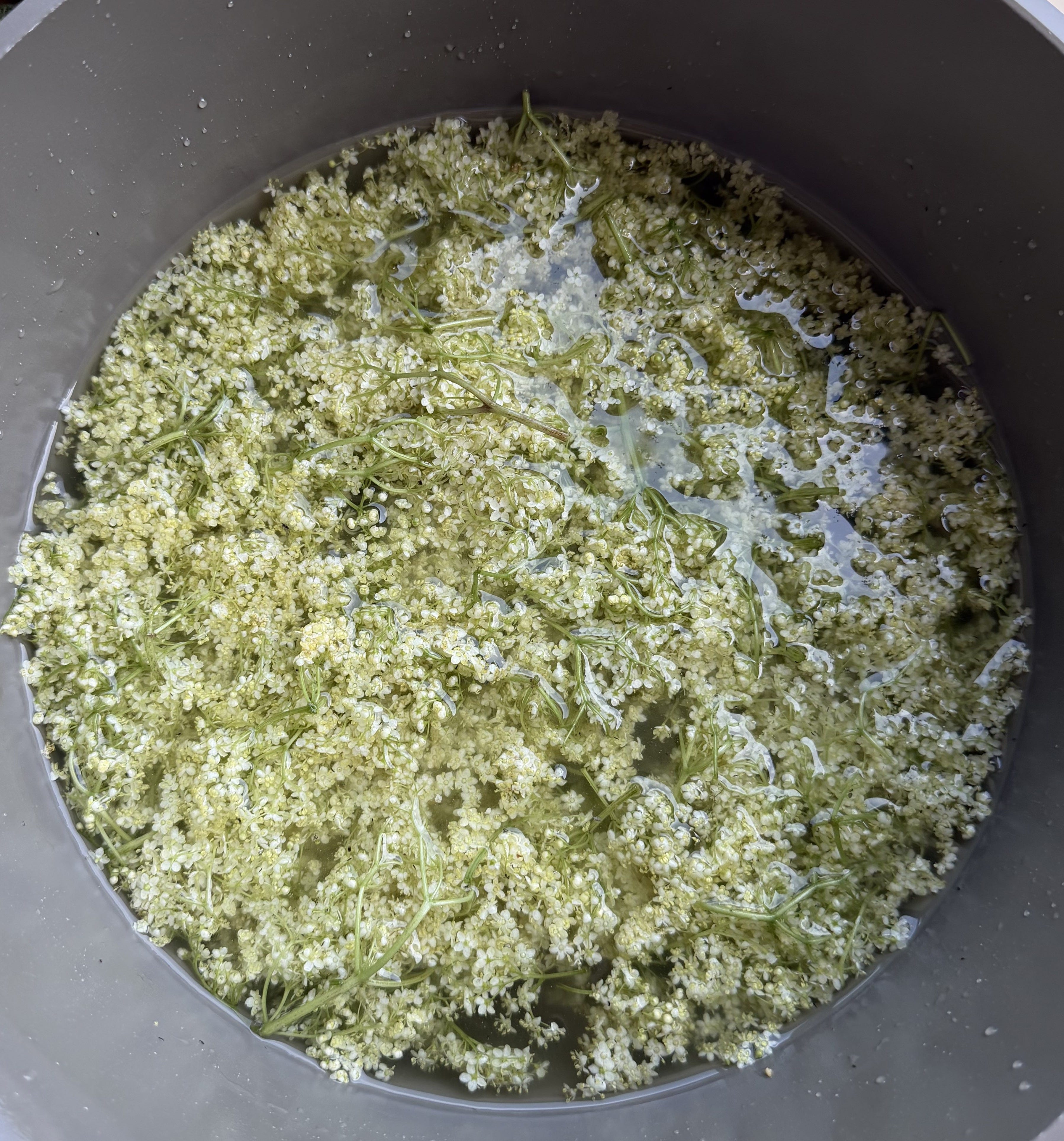
One of my favourite parts of this time of year has nothing to do with big events, holidays, or plans.
It’s the smell of elderflower.
Every year, for a few short weeks, my cycle to work is accompanied by that unmistakable scent. It’s the type of floral which is sweet, but not sickly. My favourite kind. I love that I discover new elderflower trees, smelling them before they’ve even caught my eye. It’s one of those simple pleasures that never gets old.
This is the time that truly feels like the beginning of summer to me. Not the height of summer with blazing sunshine and dusty grass, but that hopeful early stretch when everything is still lush and vibrant.
As much as I love the scent on my commute, I always want to capture some of it before it disappears. Elderflower season is short-lived and, like many of the best seasonal ingredients, it’s always worth making the most of while it’s still around.
The past couple of years, I’ve taken this time for granted, rushing around and not taking a moment to stop and properly appreciate it. So this year, I made sure I headed out with a big empty bag, a pair of scissors and good intentions to gather enough flowers for cordial.
Once you’ve made your own elderflower cordial, it’s very difficult to go back to shop-bought versions. The flavour is brighter, fresher and far more fragrant. It has a natural taste that just isn’t replicated by the shop bought versions. I use it throughout the summer in sparkling water, cocktails, baking, puddings and all sorts of desserts.
One of my all-time favourite uses is in my elderflower custard doughnuts. They’re the sort of bake that makes people stop mid-conversation and ask what that flavour is. The elderflower adds something subtle and elegant that pairs beautifully with rich vanilla custard.
But before we get to cordial, let’s talk about picking.


My Top Tips for Picking Elderflower
I’ve learned most of these through trial and error over the years, and they make a noticeable difference to the final flavour.
Don’t pick elderflowers when it’s been raining
This is probably my number one rule. You want dry flowers. The pollen on the blossoms contributes a huge amount of flavour and aroma. Heavy rain washes some of that away, leaving you with flowers that simply don’t have the same intensity. If it’s been raining, wait for a dry spell and head out once everything has had a chance to dry properly.
Pick elderflowers in the morning
Particularly on warm, sunny days. The flowers are often at their best first thing in the day when they’re fully open and wonderfully fragrant. There’s something quite magical about heading out early and finding entire trees covered in creamy-white blooms buzzing with life. Morning-picked flowers always seem to give me the most aromatic cordial.
Always pick above waist height
This is partly common sense and partly self-preservation. Flowers lower down are more likely to have been splashed by mud, brushed by dogs or exposed to all sorts of things you’d rather not think about when making cordial. Picking higher up generally means cleaner flowers and less preparation when you get home.
Pick from a few different trees
Rather than stripping a single tree, I like to collect a few flower heads from several different trees. It’s better for the plants, better for wildlife and feels like (and is) a more respectful way of foraging. Different trees can also vary slightly in fragrance and flavour, so combining flowers from several sources often creates a more rounded cordial.
Avoid flowers covered in aphids
A few aphids are almost inevitable and nothing to panic about. However, some trees seem to attract huge numbers of them. If I come across flowers that are heavily populated, I simply move on and find another tree.
There are always plenty around during peak season, and it saves a lot of faffing later.
A Small Note on Foraging
One of the things I love most about elderflower is how accessible it is. You don’t need specialist equipment, expensive ingredients or expert-level knowledge. You simply need to slow down enough to notice what’s growing around you. That said, I always try to forage thoughtfully. I never take more than I need, I leave plenty behind for pollinators and for the berries that will develop later in the year, and I avoid picking from roadsides with heavy traffic. Part of the joy is knowing that you’ll return next year and find the trees thriving.
My Simple Elderflower Cordial
This is the recipe I use every time I make elderflower cordial. It’s uncomplicated, reliable and leaves me with the perfect amount of cordial to enjoy all summer long.